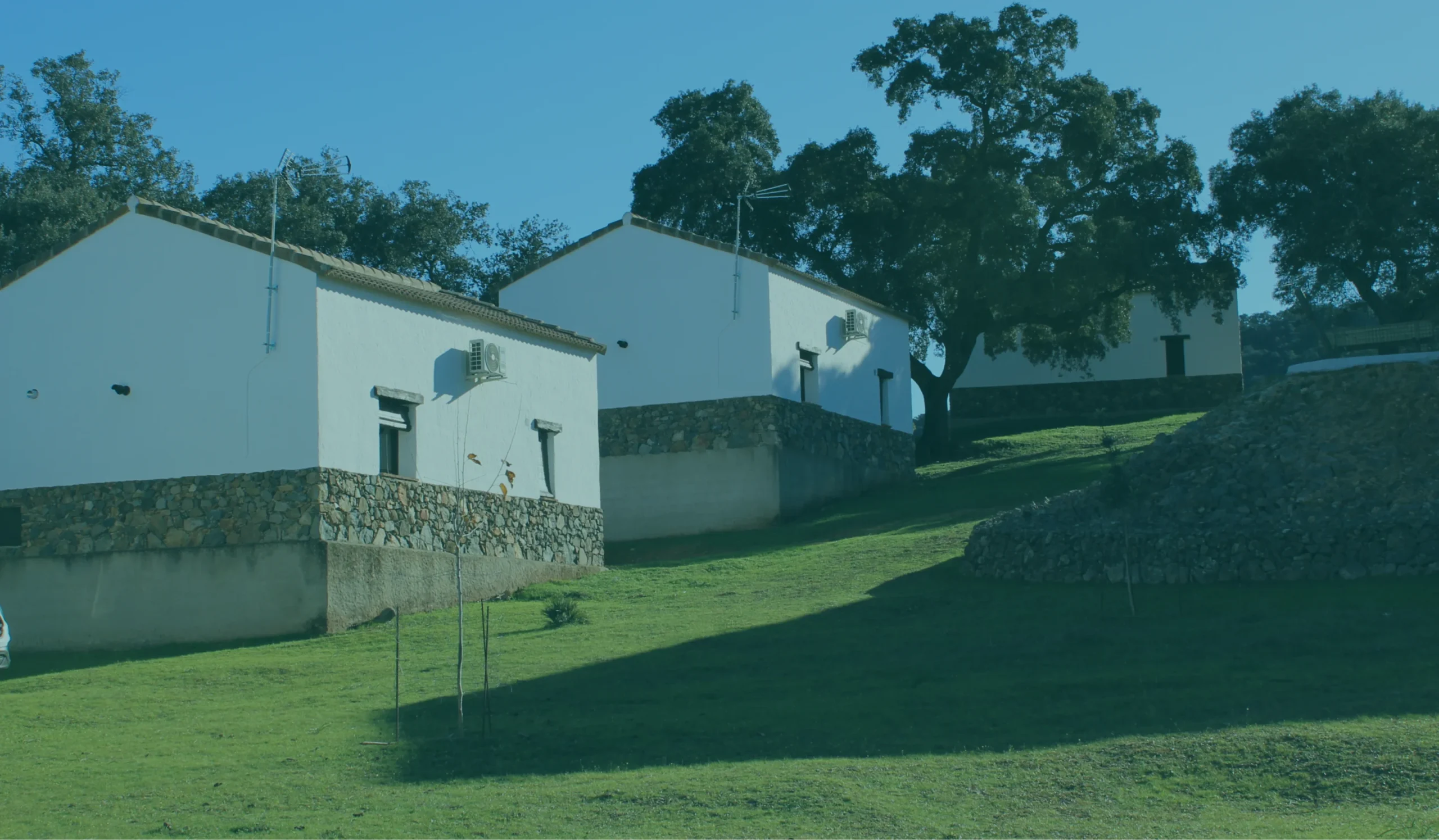
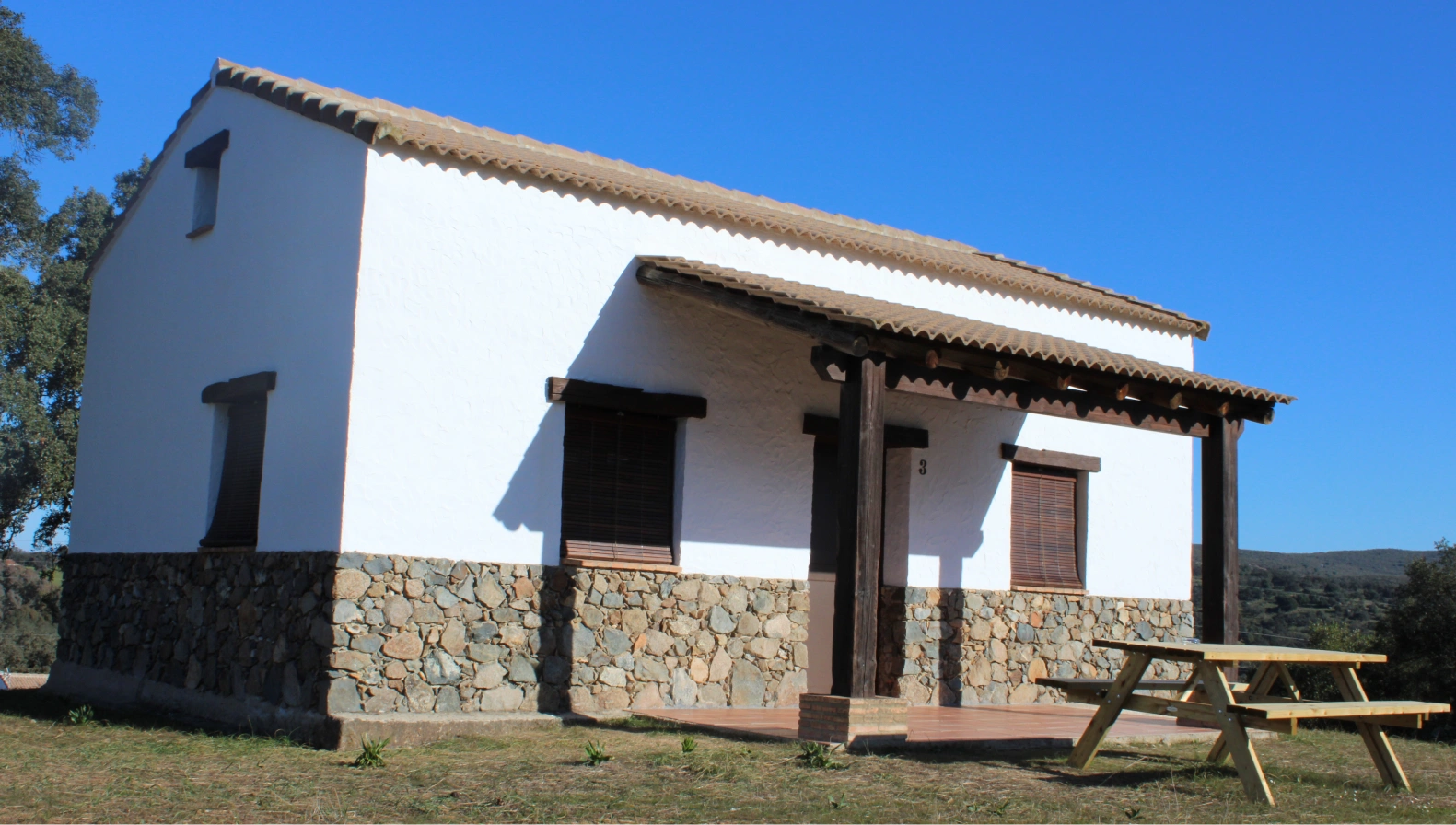
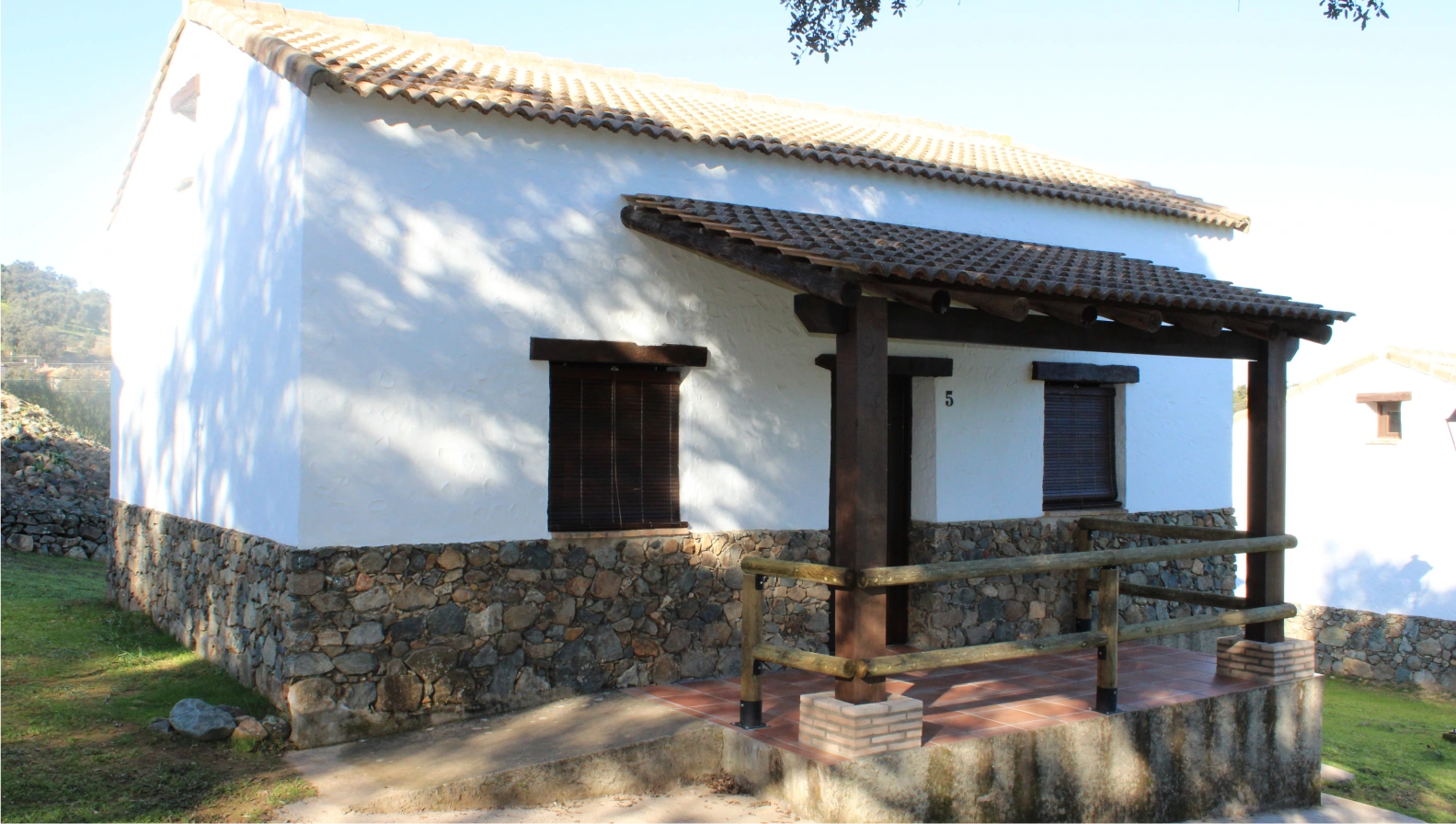
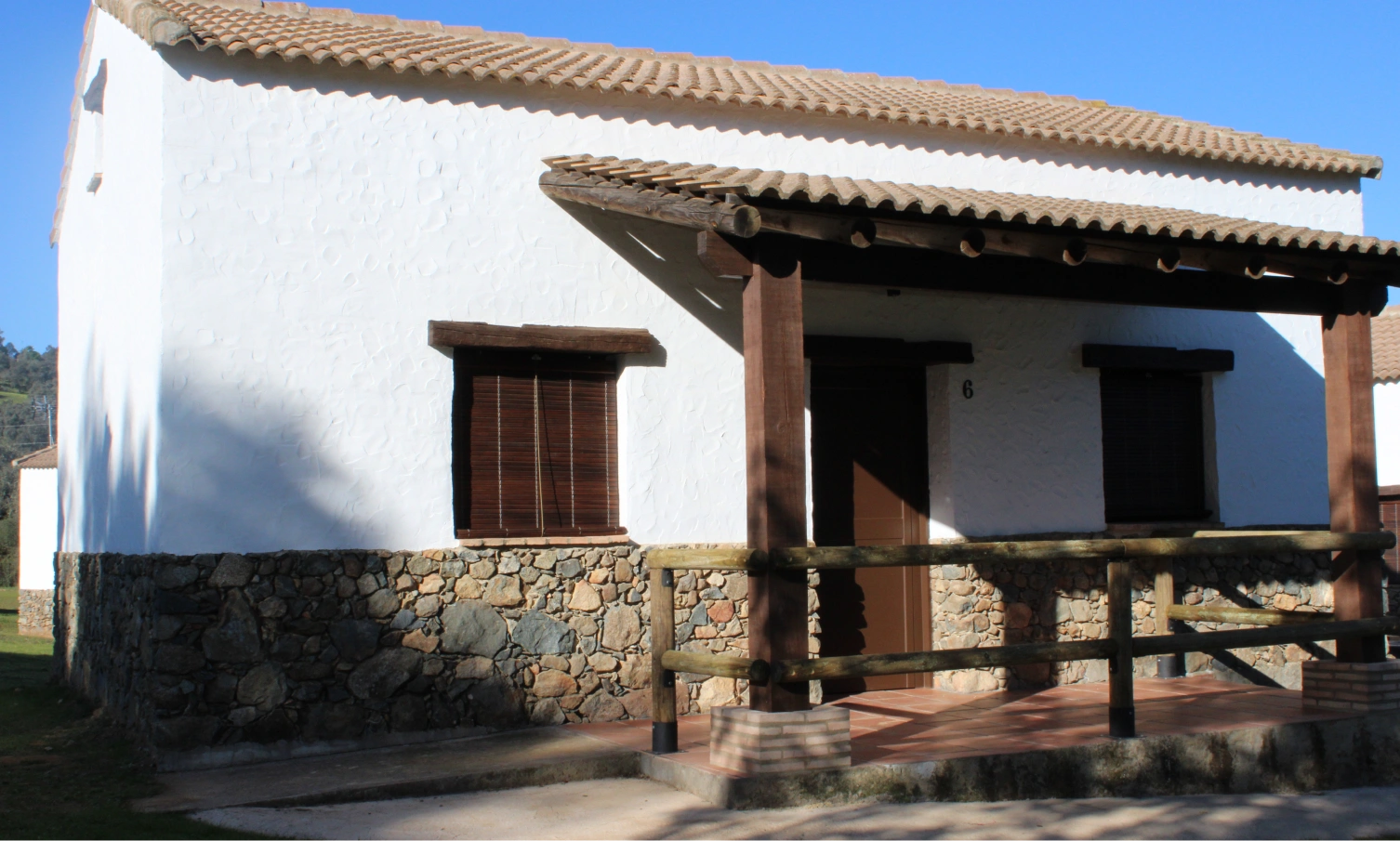
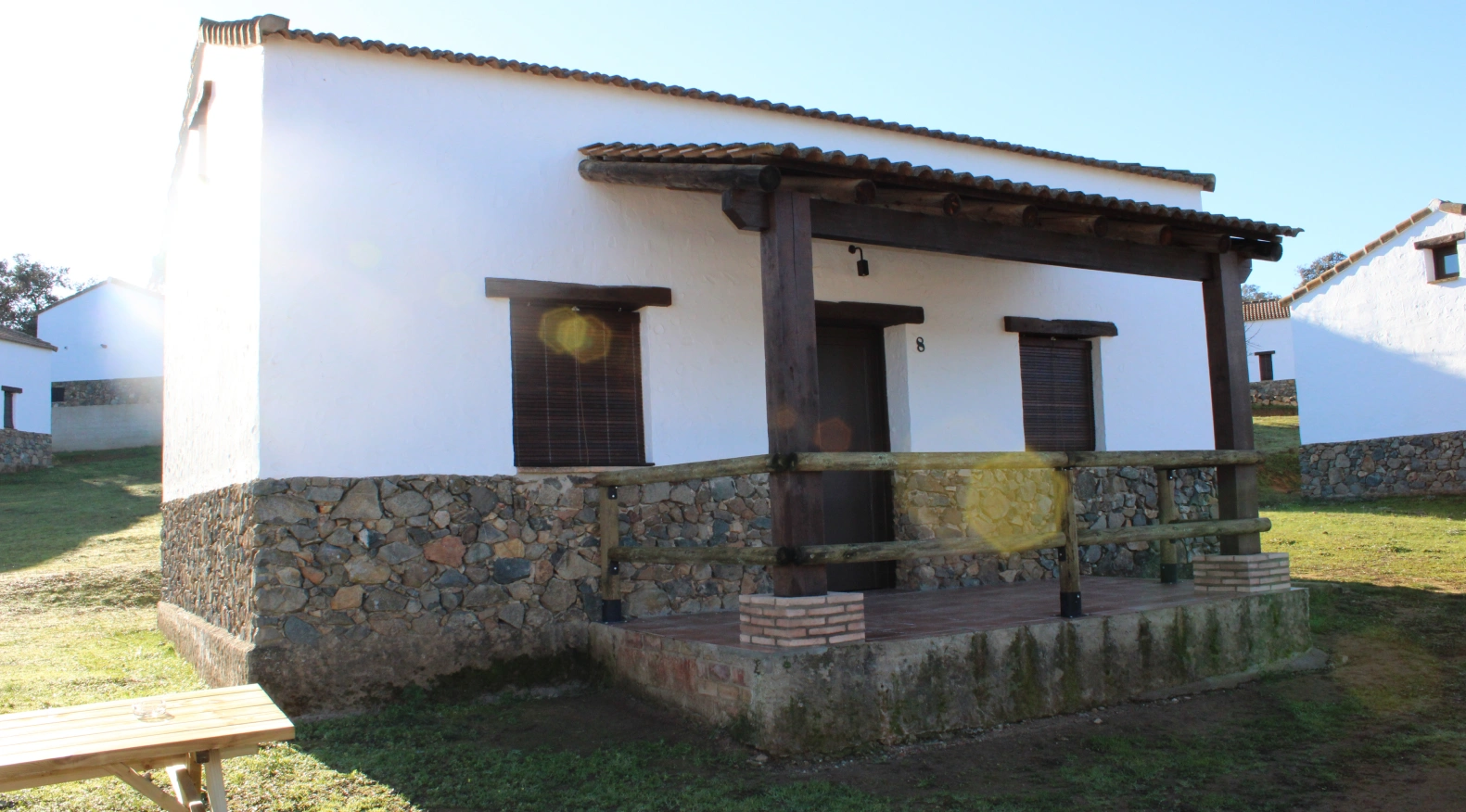
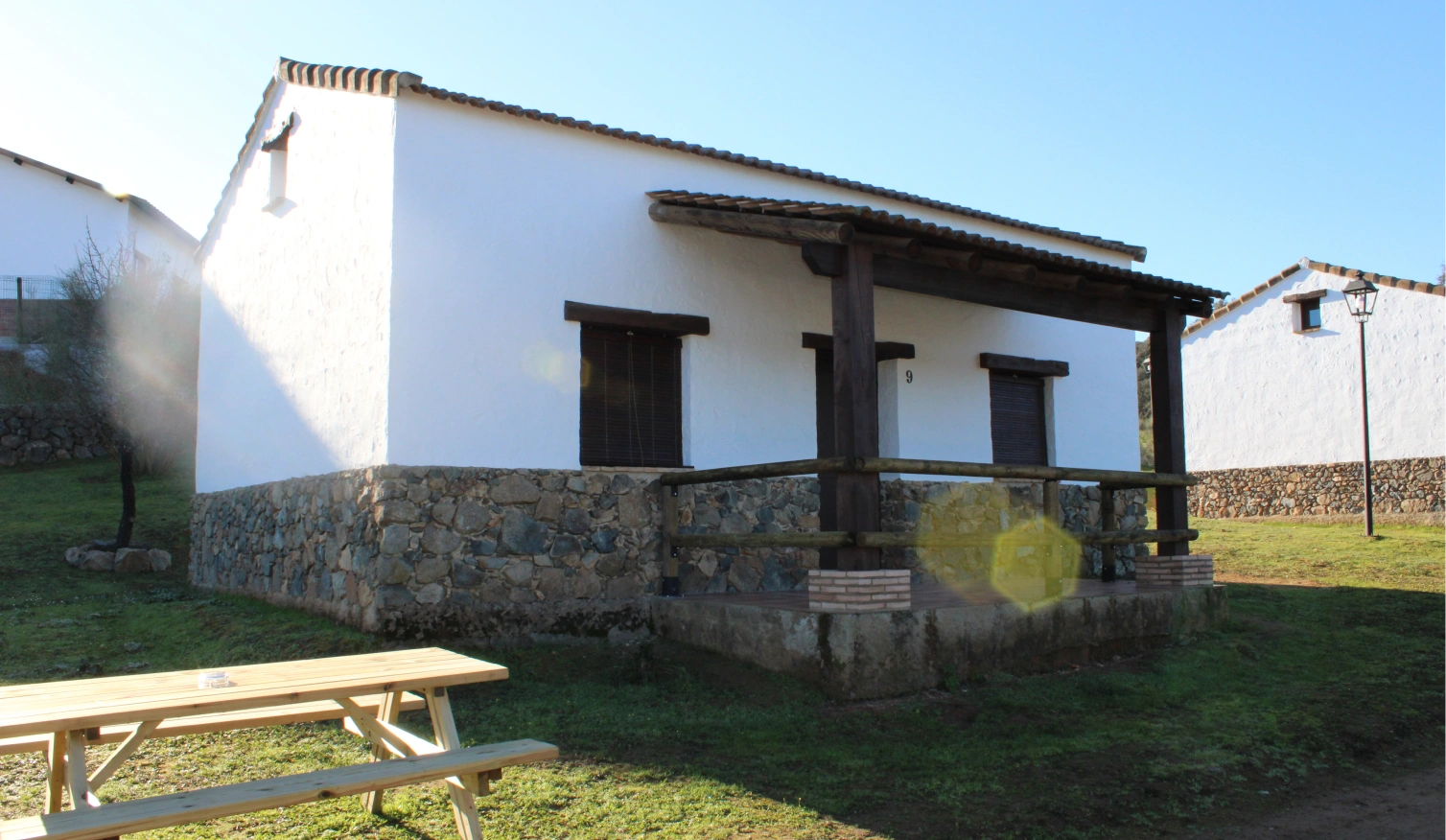
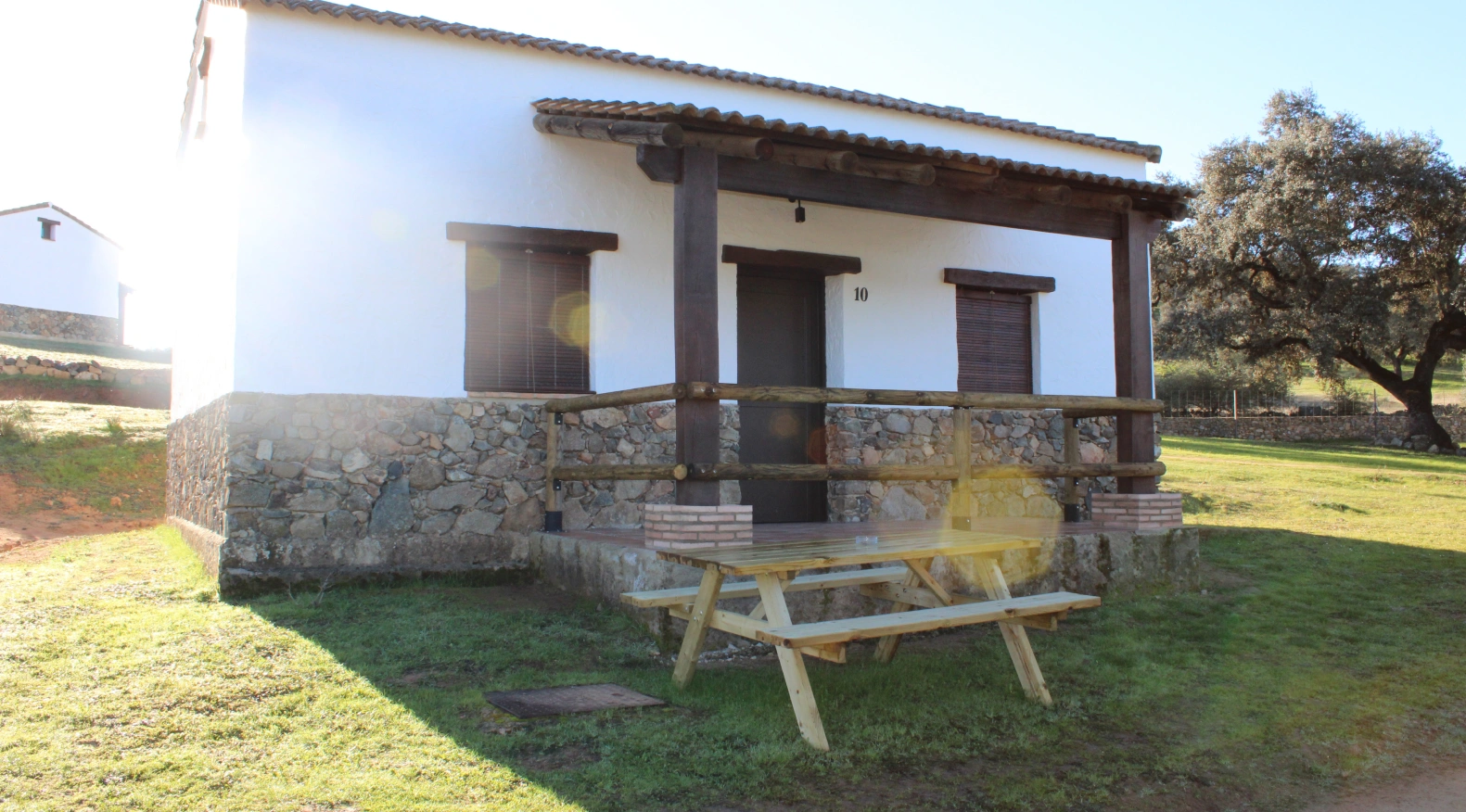
The rural accommodation Sevilla in Al Muniat offers independent houses in an environmentof peace and natural beauty. Each country house is equipped with a fireplace, air conditioning, a full kitchen and a sofa bed. Our rural accommodation in Seville guarantees rest and comfort, perfect for families or groups looking to disconnect in a welcoming environment. More information about rural tourism in Seville.
Fully equipped rural houses
A rural accommodation in Seville ideal for families and groups
La Alcornocosa – House 1
Made up of the neighborhoods Las Pizarras, Triana, and Los Humeros, La Alcornocosa is known for its cork harvesting and the unique Hermitage of San Antonio. Perfect for wandering through scenic trails like Camino del Confite, or tasting local treats such as the traditional ‘Torta de Carnaval’.
With a healthy climate and northern winds, Archidona was once home to miners who settled and fell in love with its charm. It’s the birthplace of flamenco in the region and houses the only official Flamenco Club in the area. Known for artisanal weaving (‘tomiza’) and homemade cheeses, you’ll also find preserved schoolhouses turned chapels and ancient May Cross traditions.
Along the circular Guadiamar Trail lies Las Cañadillas, renowned for mindfulness and yoga retreats. Of special interest is the ‘Dolmen Lapa del Moro,’ a burial site of 14 tombs. Home to a honey factory, this is a space to reconnect with the essence of nature.
Valdeflores radiates life through its oak groves and mountain air. Simplicity defines this village where even the smallest details hold meaning. The legendary flamenco singer El Pali even dedicated a song to its spirit. Home to the Juan Pedro Domecq ranch and the celebration of Our Lady of Fátima festival.
With the Virgin of El Rocío as its matron saint, El Cañuelo celebrates its pilgrimage each May. On July 16th, the famous Pepper Festival fills the streets with local color and flavor.
Divided into Upper and Lower Venta, this village is connected by trails to El Castillo de las Guardas. Known for its woodcraft traditions, roadside hermitage, and local cuisine, it’s a place of heritage and heartfelt celebration.
Named after the yellow-flowered shrub that blooms in spring, La Aulaga was once filled with natural springs and whitewashed homes. Storyteller Mari Carmen Delgado Barranqueros was born here and drew inspiration from village life. The Cross Festival stands out for its colorful auctions and choice of village stewards.
Legend tells of two goatherds who divided the village after a dispute. El Peralejo’s mining heritage dates back to Tartessos times, and its reservoir still supplies water to the town. The area is also home to the ‘Stonebreaker’ plant—a traditional remedy for kidney stones.
With multiple springs and a scenic trail, Peroamigo is home to mine tailings that still yield semi-precious stones like amethyst and translucent quartz. The village also features ancient grain-threshing circles and an open-access astronomical observatory for stargazing enthusiasts.